

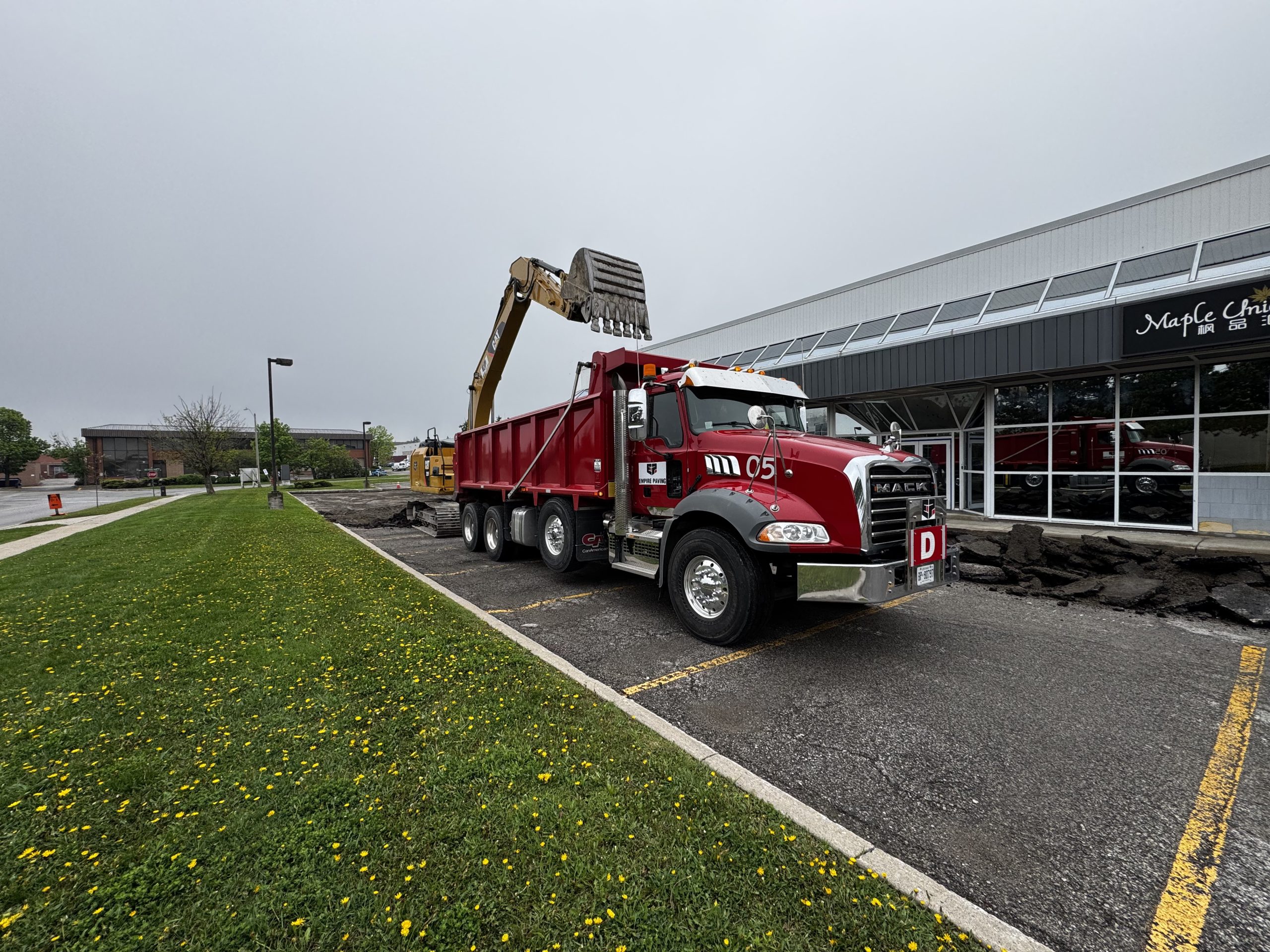
A Practical Guide for Smarter Planning, Lower Repair Costs, and Long-Term Pavement Performance.
Winter is expensive for asphalt. Freeze-thaw cycles, snowplow scraping, salt exposure, and heavy traffic quietly weaken parking lots, drive lanes, and access roads. By early spring, property managers are left asking the same question: How much is this going to cost us this year?
Preparing an asphalt budget after winter is not about guessing. It is about inspection, prioritization, and understanding what small repairs prevent large capital expenses. If you manage commercial, retail, industrial, or multi-unit properties, this guide will help you build a smarter asphalt maintenance budget, reduce emergency repairs, and extend pavement lifespan.
Why Does Winter Have Such a Big Impact on Asphalt?
Winter damage is not always visible right away. Beneath the surface, a predictable cycle occurs:
- Water enters small cracks
- Temperatures drop and freeze that moisture
- Ice expands and widens the cracks
- The base weakens
- Traffic compresses the damaged area
- Surface failure begins
Snowplows scrape edges and loosen weak sections, while ice melt accelerates moisture penetration. Heavy winter traffic adds stress to already compromised pavement. By spring, many properties face potholes, alligator cracking, drainage failures, faded line striping, and edge deterioration. Understanding this cycle helps property managers build realistic asphalt repair budgets.
What Should Be Inspected Before Building an Asphalt Budget?
Before allocating funds, conduct a thorough parking lot inspection. Every post-winter inspection should assess:
- Surface cracking
- Pothole formation
- Drainage and ponding
- Joint separation
- Curb line integrity
- Line striping visibility
- High-traffic zones
- Loading dock areas
Document everything with photos and compare to previous years if possible. A proper inspection transforms your asphalt budget from reactive to strategic.
How Do You Separate Cosmetic Issues from Structural Problems?
Not all damage requires full replacement. Understanding the difference prevents overspending.
Surface-Level Issues:
- Hairline cracks
- Minor raveling
- Faded line striping
- Light edge wear
These are typically handled through crack sealing, patching, and line painting.
Structural Issues:
- Alligator cracking
- Repeated potholes in the same area
- Soft spots
- Drainage collapse
- Base failure
These may require full-depth patching, milling, or resurfacing. Smart budgeting begins with knowing which category your pavement falls into.
Should Crack Sealing Be Prioritized in Spring Budgets?
Yes. Crack sealing is one of the most cost-effective items in any asphalt maintenance budget.
If cracks are sealed early:
- Water infiltration is reduced
- Freeze-thaw damage is limited
- Base layers remain stable
- Larger repairs are avoided
If cracks are ignored:
- Moisture penetrates
- Potholes develop
- Repair costs increase
Crack sealing should be one of the first line items in spring asphalt planning.
How Do You Plan for Pothole Repairs After Winter?
Potholes demand immediate attention because they create vehicle damage risk, slip-and-fall hazards, liability exposure, and ongoing surface deterioration.
When estimating repair costs, consider:
- Number of affected areas
- Depth of damage
- Whether base repair is required
- Traffic load in the area
Delaying pothole repair increases both cost and risk.
When Should Resurfacing Be Considered Instead of Spot Repairs?
If multiple sections show widespread cracking or repeated patching, resurfacing may be more cost-effective than ongoing repairs.
- The base is still stable
- Surface damage is widespread
- Drainage remains functional
- Structural failure is limited
Resurfacing extends pavement lifespan without full reconstruction.
How Do Drainage Issues Affect Asphalt Budgets?
Drainage failures are expensive when ignored. Standing water accelerates deterioration, intensifies freeze-thaw cycles, and weakens the base structure.
Budget planning should include:
- Catch basin adjustments
- Regrading
- Drainage correction
- Surface leveling
Should Line Striping Be Included in Post-Winter Budgets?
Yes. Winter salt and plowing fade markings quickly, impacting safety and traffic flow.
Spring is the ideal time for:
- Parking lot line striping
- Accessible parking updates
- Fire route repainting
- Directional arrows
- Crosswalk markings
Clear striping improves safety, organization, and overall property appearance.
How Can Property Managers Forecast Asphalt Costs Accurately?
Accurate budgeting requires data, not assumptions. Consider:
- Total pavement square footage
- Traffic type and volume
- Age of the surface
- Maintenance history
- Drainage performance
Short-Term (0–12 Months):
- Crack sealing
- Pothole repair
- Line striping
Long-Term (3–5 Years):
- Resurfacing
- Section replacement
- Full-depth reconstruction
What Should Be Included in a Post-Winter Asphalt Budget Checklist?
- Surface crack sealing
- Pothole repair
- Drainage inspection
- Catch basin adjustment
- Line striping repainting
- Edge reinforcement
- High-traffic zone review
- Capital resurfacing planning
Final Thoughts: Build Smarter Asphalt Budgets This Year
Preparing asphalt budgets after winter requires inspection, prioritization, and long-term planning. Focus on early crack sealing, immediate pothole repair, drainage correction, strategic resurfacing, and preventative maintenance.
Commercial asphalt is a long-term asset, and managing it proactively reduces risk while protecting property value. If your property has experienced winter damage, a professional evaluation can provide clarity and help guide smarter budgeting decisions.
Smart budgeting today prevents major reconstruction tomorrow.

 We were very pleased with the professional job done by Empire Paving this fall.
Luciano and his team were very reliable, knowledgeable and able to handle all issues that arose during completion of this project. We would highly
recommend Empire Paving for any paving job!
We were very pleased with the professional job done by Empire Paving this fall.
Luciano and his team were very reliable, knowledgeable and able to handle all issues that arose during completion of this project. We would highly
recommend Empire Paving for any paving job!