

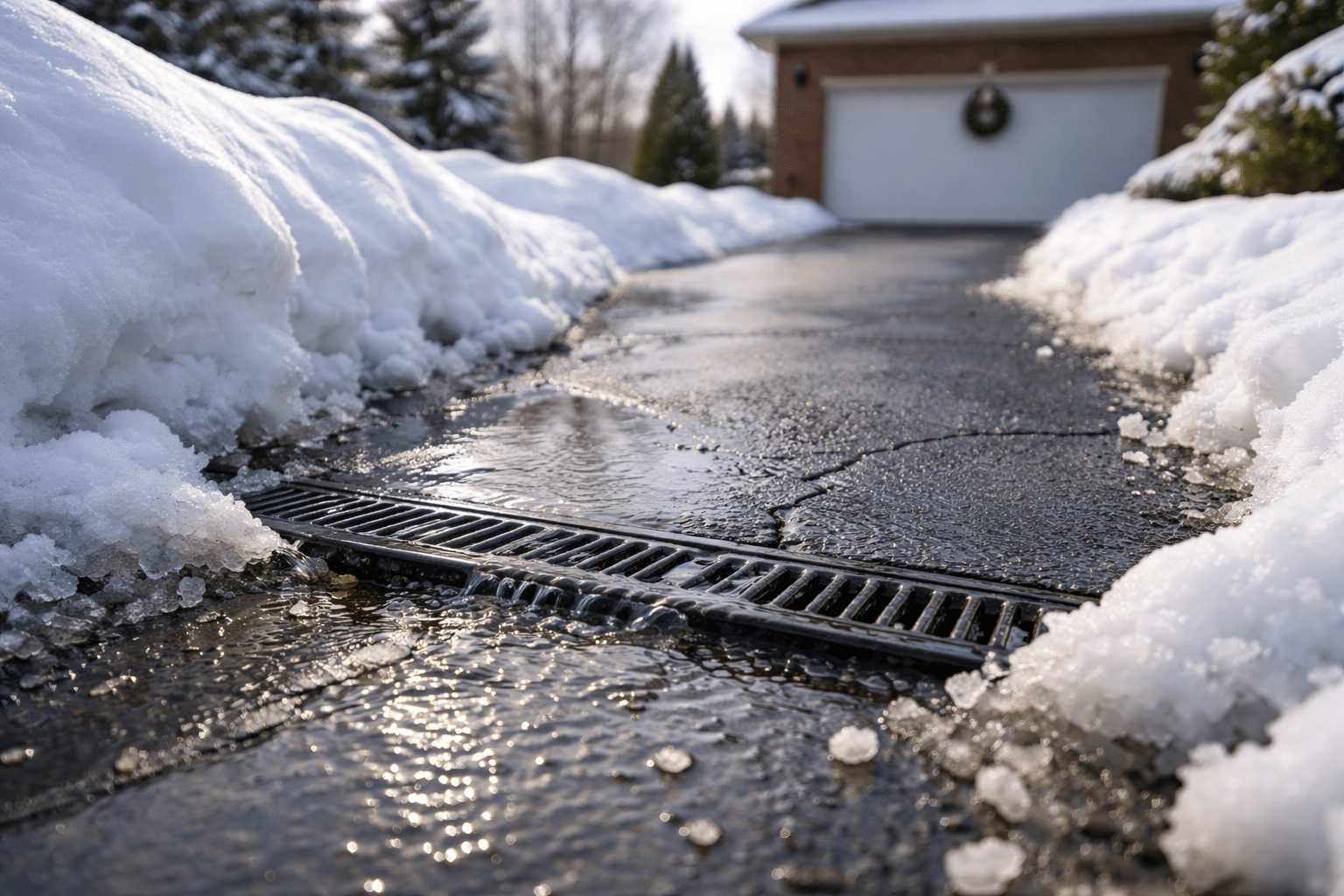
Water is one of the biggest threats to asphalt driveways—especially during winter. Snow, ice, and repeated freeze-thaw cycles allow moisture to seep into small cracks and weak points. Once water reaches the base below the asphalt, damage accelerates quickly.
The good news? With the right preparation and a clear plan, you can protect asphalt surfaces, reduce repair costs, and keep your driveway in good condition throughout the winter months.
This guide explains what causes water damage, how to stop it, and what homeowners should focus on before and during winter.
Why Water Is So Damaging to Asphalt in Winter
Asphalt is durable, but it isn’t waterproof. When water enters cracks or surface gaps, it settles beneath the asphalt. As temperatures drop, that water freezes and expands. When it thaws, it leaves empty spaces under the surface.
This repeated cycle leads to:
- Cracks spreading
- Potholes forming
- Uneven or sinking sections
- Premature driveway failure
That’s why it’s critical to make sure to prevent asphalt water damage before winter sets in.
Common Signs of Water Damage in Asphalt Driveways
Knowing what to look for helps you act early.
Watch for:
- Cracks that widen over time
- Standing water after rain or snowmelt
- Soft or spongy areas
- Small depressions near the edges
- Potholes forming after winter
Addressing these signs early is far easier—and far less expensive—than waiting until spring.
Step 1: Seal Cracks Before Winter Arrives
Cracks are the main entry point for water. Even hairline cracks allow moisture to seep below the surface.
Why Crack Sealing Matters
- Stops water infiltration
- Prevents cracks from spreading
- Reduces freeze-thaw damage
Crack sealing is one of the most effective ways to protect asphalt surfaces before winter.
Step 2: Improve Drainage Around the Driveway
Poor drainage is a leading cause of water damage. If water sits on or near your driveway, it will eventually penetrate the asphalt.
Effective driveway drainage solutions include:
- Proper driveway slope away from buildings
- Clear drainage paths for runoff
- Removing soil buildup along edges
- Keeping nearby drains and catch basins clear
Water should always flow away from the driveway—not pool on top of it.
Step 3: Clean the Driveway Regularly
Debris traps moisture against the asphalt surface. Leaves, dirt, and snow piles can block drainage and accelerate damage.
Before winter:
- Clear leaves and dirt
- Remove debris from edges
- Keep drainage areas open
Simple cleaning plays a big role in winter driveway maintenance.
Step 4: Avoid Heavy Loads in the Same Spot
During colder months, asphalt becomes less flexible. Parking heavy vehicles in the same location can stress the surface—especially if moisture is already present.
To reduce risk:
- Avoid parking heavy vehicles long-term
- Change parking positions occasionally
- Keep heavy equipment off residential driveways when possible
This helps prevent cracks from forming under pressure.
Step 5: Be Careful With Snow Removal
Snow removal is necessary—but improper techniques can damage asphalt.
Best practices for winter driveway maintenance:
- Use rubber-edged or plastic shovels
- Set snowplow blades slightly above the surface
- Avoid scraping down to bare asphalt repeatedly
- Don’t pile snow in low drainage areas
Aggressive snow removal can expose weak spots and allow water to enter.
Step 6: Use Ice Control Products Carefully
Some ice-melting products can damage asphalt or speed up surface wear.
Tips:
- Use products labeled safe for asphalt
- Apply sparingly
- Avoid repeated heavy applications
Excess chemicals can weaken the asphalt binder over time.
Step 7: Address Standing Water Immediately
If you notice water pooling on your driveway, don’t ignore it.
Standing water often means:
- Poor slope
- Blocked drainage
- Base settlement
Professional assessment can identify whether grading or surface correction is needed. Correcting drainage early is one of the best driveway drainage solutions available.
Can Sealcoating Help Prevent Winter Water Damage?
Yes—when done at the right time. Sealcoating adds a protective layer that:
- Reduces water penetration
- Protects against oxidation
- Improves surface durability
Sealcoating should be completed well before cold temperatures arrive to allow proper curing.
When to Call a Professional
Some issues require more than surface maintenance. Call a professional if:
- Cracks return quickly after repairs
- Potholes form repeatedly
- Water pooling continues
- Sections of the driveway sink
A professional can assess whether base repairs or resurfacing are needed to make sure prevent asphalt water damage long-term.
How Preventative Care Saves Money
Ignoring water damage leads to:
- Larger repairs
- Full driveway replacement
- Higher costs
Preventative care helps:
- Extend driveway lifespan
- Reduce emergency repairs
- Maintain safe access
Consistent maintenance is the most effective way to protect asphalt surfaces year after year.
Final Thoughts: Prepare Now, Repair Less Later
Winter is tough on asphalt—but water damage is preventable. Sealing cracks, improving drainage, maintaining clean surfaces, and following proper winter driveway maintenance steps can make a significant difference.
By focusing on prevention and smart care, homeowners can avoid costly repairs and keep driveways in reliable condition through the coldest months. If you’re unsure about the condition of your driveway, a professional assessment before winter can help identify risks early and recommend the right driveway drainage solutions for your property.



 We were very pleased with the professional job done by Empire Paving this fall.
Luciano and his team were very reliable, knowledgeable and able to handle all issues that arose during completion of this project. We would highly
recommend Empire Paving for any paving job!
We were very pleased with the professional job done by Empire Paving this fall.
Luciano and his team were very reliable, knowledgeable and able to handle all issues that arose during completion of this project. We would highly
recommend Empire Paving for any paving job!