

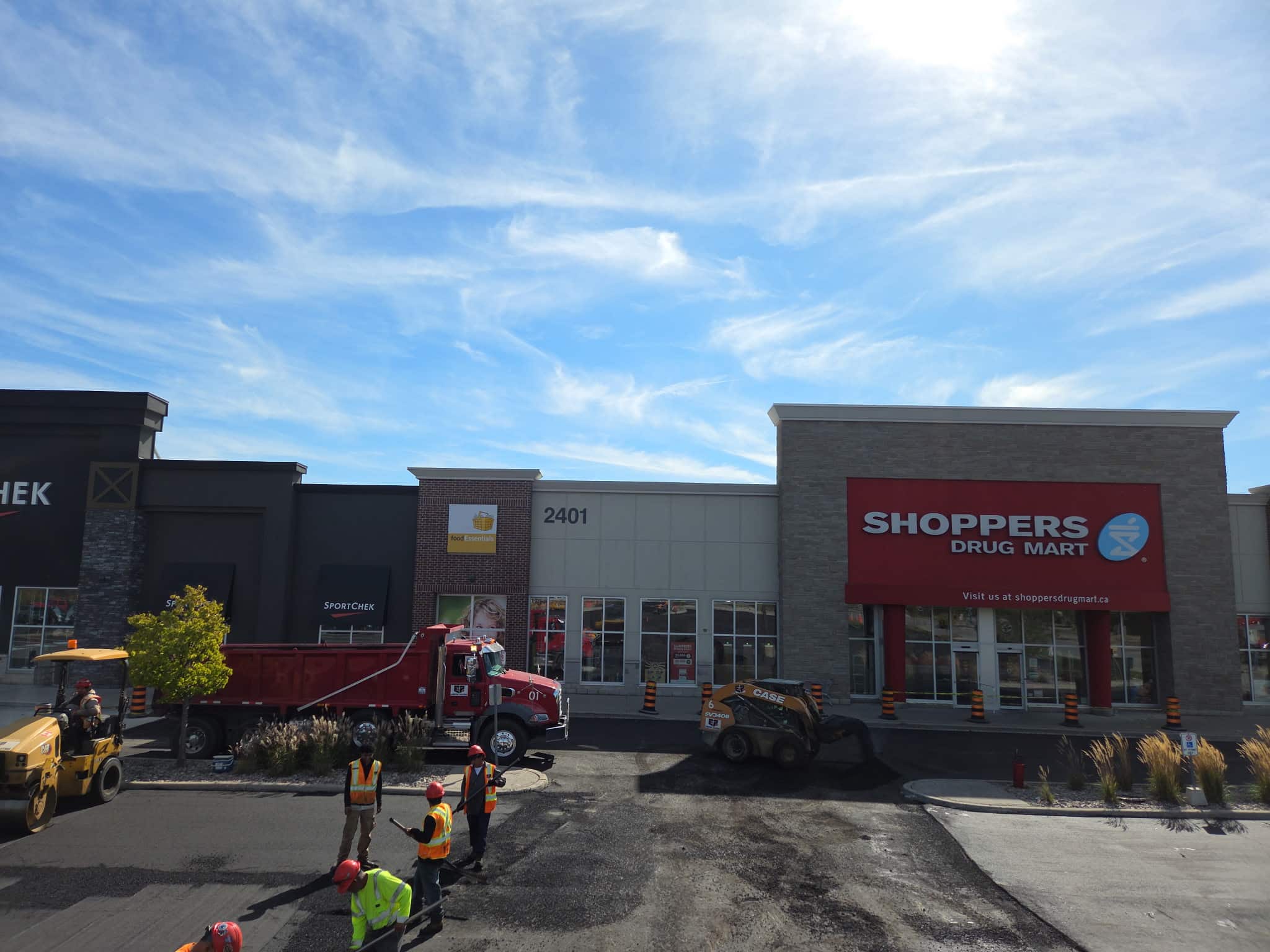
Winter is when commercial parking lots start showing the problems that were building all year. Cracks open up faster. Potholes form in days, not months. Water stops draining properly and turns into ice. Line striping fades, and suddenly traffic flow becomes messy and unsafe.
If you manage a commercial property in the GTA, this is not the season to ignore your pavement.
At Empire Paving, we recommend a simple habit for winter:
do a parking lot walkthrough every 2 weeks.
It is one of the easiest ways to reduce liability, prevent rapid deterioration, and plan spring asphalt repairs before they become emergencies.
This checklist is built for:
- property managers
- facility managers
- commercial landlords
- industrial site supervisors
- condo boards
- retail plaza owners
It focuses on what matters most in winter: safety, drainage, and early detection.
Why Winter Parking Lot Inspections Matter
Commercial asphalt is designed to handle heavy traffic, but winter puts stress on the surface in ways that most property owners underestimate.
Here is what happens in Ontario conditions:
- Water enters small cracks in the asphalt
- Temperatures drop and that water freezes
- Ice expands and forces cracks wider
- The surface weakens
- Traffic and plowing break apart the damaged area
- Small issues turn into potholes and trip hazards
This process repeats dozens of times between December and March.
That is why commercial asphalt maintenance in winter is not just helpful. It is cost control.
A 15–30 minute walkthrough every two weeks can help you:
- catch potholes before they spread
- identify drainage failures before spring flooding
- reduce slip and fall risks
- plan commercial asphalt repair early
- avoid last-minute emergency calls in spring
How to Use This Checklist
You do not need special equipment. You just need a consistent routine.
Bring:
- your phone (photos are your best record)
- a flashlight (winter lighting is poor)
- a notepad or checklist
- a tape measure (optional)
If you manage multiple properties, keep a simple folder for each site. Take photos from the same angles every time. It makes changes obvious.
The Winter Walkthrough Checklist (Every 2 Weeks)
1) Potholes and Surface Breaks
Potholes are one of the most common winter parking lot problems, and they often form faster than people expect. In many cases, the lot does not “suddenly” develop potholes. The damage was already present. Winter simply accelerates it.
Potholes usually start as:
- a cracked patch
- a soft area
- a depression
- a failing seam between old and new asphalt
Once water gets into that area and freezes, the surface begins breaking apart from the inside.
What to look for:
- holes that are even 1–2 inches deep
- loose gravel or broken asphalt pieces
- jagged edges forming around a crack
- dark areas that look wet even in freezing temperatures
Why this matters:
- potholes become vehicle damage risks
- snow and slush hide potholes
- potholes expand rapidly in freeze-thaw cycles
- potholes are a common reason for liability claims
If you spot potholes early, you can often stabilize them with winter patching until permanent repairs can be completed in warmer weather.
2) Cracks That Are Spreading or Holding Ice
Cracks are not always urgent. But cracks that hold water, collect ice, or spread quickly are a major warning sign in winter.
Many commercial property owners assume cracking is cosmetic. In reality, cracks are the entry point for moisture. Once water enters the pavement structure, winter expansion begins.
What to look for:
- long cracks running across traffic lanes
- cracks that branch out in multiple directions
- cracks around catch basins
- cracks near loading zones
- cracks at the edge of the lot
Red flags:
- cracks wider than a quarter-inch
- cracks that have begun forming “webbing” patterns
- cracks that look darker because moisture is trapped inside
- cracks that appear to grow between walkthroughs
This is one of the biggest reasons commercial parking lots fail earlier than they should. It is also one of the most preventable.
3) Areas Where Ice Keeps Returning
Every commercial property has at least one area that turns into an ice patch no matter how often it is salted.
That is rarely a salt problem. It is usually a drainage problem.
The most common recurring ice zones are:
- in front of entrances
- at crosswalks
- at curb ramps
- near catch basins
- around loading docks
- at the bottom of slopes
What to look for:
- shiny, smooth ice areas that reappear after clearing
- puddles that freeze into wide ice sheets
- melting snow piles that drain across walkways
- runoff that refreezes overnight
Why this matters:
Recurring ice is one of the most serious winter liability issues for commercial properties. If you are repeatedly salting the same spot, it is a signal that the lot is not draining correctly.
A good commercial asphalt contractor will not just patch the ice area. They will identify the cause.
4) Drainage Failures and Low Spots
Drainage is one of the most overlooked parts of parking lot maintenance. It is also one of the most expensive issues when ignored.
When water cannot drain properly, it sits on the asphalt surface. In winter, that standing water becomes ice. In spring, it becomes flooding. In both cases, it weakens the pavement base.
What to look for:
- puddles that freeze repeatedly
- water that drains toward the building
- ice sheets that form in the same spot every storm
- areas that stay wet longer than the rest of the lot
- depressions near traffic lanes
Common commercial trouble zones:
- entrances
- main drive aisles
- truck routes
- areas around catch basins
- older lots with multiple patch sections
If your lot has multiple low spots, it may need more than surface patching. It may need grading corrections, catch basin adjustment, or resurfacing planning.
5) Catch Basins, Storm Drains, and Grates
Catch basins are one of the most important features on a commercial parking lot. But in winter, they often get buried under snow piles and ignored.
That creates a chain reaction:
- snow melts
- water cannot drain
- water pools
- water freezes
- the lot becomes icy
- the base becomes saturated
- potholes form
What to look for:
- catch basins covered by plowed snow
- grates blocked by slush or salt buildup
- standing water around the basin
- broken or shifting grates
- frames that sit lower than the asphalt surface
If a catch basin is damaged or sunken, it often becomes a weak point that cracks repeatedly. This is extremely common on older commercial lots across the GTA.
6) Loading Docks and Heavy-Traffic Areas
If your property has loading docks, shipping areas, or truck routes, those sections need special attention. They fail faster than the rest of the lot because the loads are heavier and the turning stress is higher.
In winter, heavy-traffic zones break down even faster.
What to look for:
- rutting where tires sit repeatedly
- depressions near dock doors
- edge cracking where trucks turn
- asphalt pushing or shifting near entrances
- patches that are breaking apart again
This matters because once heavy-traffic asphalt starts failing, the damage spreads quickly. It also tends to require larger repairs, such as full-depth patching, milling, or resurfacing.
7) Parking Lot Edges, Curbs, and Crumbling Perimeters
Parking lot edges are a common failure zone, especially in areas where the asphalt does not have curb support.
Edges fail for a few reasons:
- water drains off the edge and weakens the base
- plows scrape and chip the perimeter
- traffic drives too close to the edge
- the base was not built thick enough
What to look for:
- crumbling edges
- asphalt breaking away in chunks
- gaps forming between asphalt and curbs
- sinking near grass lines
- gravel appearing along the perimeter
Edge failure is not just cosmetic. It often spreads inward and turns into full-lane cracking.
8) Trip Hazards and Uneven Transitions
Winter is when trip hazards become harder to spot and more dangerous.
Snow and slush hide uneven surfaces. Ice forms over raised patches. Lighting is poor. Pedestrians rush.
Trip hazards are especially common in:
- storefront walkways
- curb ramps
- sidewalk transitions
- accessible parking areas
- patched asphalt sections
What to look for:
- raised patches
- uneven seams between old and new asphalt
- broken curb edges
- heaving asphalt near sidewalks
- sunken sections near entrances
If you find trip hazards, document them immediately. These are some of the highest-risk liability issues on commercial properties.
9) Line Striping and Markings That Are Disappearing
Line striping is not just a visual detail. It affects traffic flow, safety, and accessibility.
In winter, striping wears down quickly due to:
- plow scraping
- salt exposure
- traffic abrasion
- freeze-thaw wear on the surface
What to look for:
- faded accessible parking markings
- unclear fire routes
- missing stop bars
- crosswalks that are no longer visible
- directional arrows that drivers cannot see
Even if line painting cannot be completed until spring, winter is the best time to plan. It ensures you are scheduled early and not stuck waiting while your lot remains unclear and disorganized.
10) Soft Spots and Signs of Base Failure
Some of the most serious parking lot problems do not start on the surface.
They start underneath.
When water penetrates the asphalt and reaches the base, the base can weaken. In winter, freeze-thaw cycles make this worse.
What to look for:
- asphalt that flexes underfoot
- areas that feel spongy
- cracks forming around a depression
- potholes returning in the same spot repeatedly
- surface sinking over time
If you notice soft spots, it is a strong sign the issue is structural. These areas typically require more than a quick patch. They need professional assessment and long-term repair planning.
A Simple Walkthrough Route That Works on Any Property
One reason inspections fail is because people walk randomly.
A better approach is to inspect in the same pattern every time. This makes it easier to spot new damage.
Empire Paving recommends dividing the lot into zones:
- Zone 1: main entrance and storefront walkway
- Zone 2: main drive aisles
- Zone 3: parking rows
- Zone 4: loading dock and truck routes
- Zone 5: catch basins and drainage zones
- Zone 6: perimeter edges and curb lines
This is especially useful for property managers overseeing multiple commercial sites.
What to Do When You Find a Problem
A winter walkthrough is only useful if you take action when hazards appear.
Here is a practical system.
Document the Issue
Take photos from:
- close-up
- mid-range
- wide-angle
If possible, take the same photo angle during your next walkthrough. It helps track progression.
Identify Safety Hazards First
If the issue is:
- a pothole
- a trip hazard
- an ice-forming low spot
- a damaged curb ramp
…it should be treated as a priority.
Decide What Can Be Stabilized Now
Not all commercial asphalt repairs require warm weather. Winter repairs are typically temporary, but they reduce liability and prevent rapid deterioration.
Common winter stabilization work includes:
- cold patch pothole repairs
- targeted asphalt patching
- temporary leveling of trip hazards
- clearing and improving drainage flow
- identifying structural failures early
Plan Spring Repairs Early
Winter is the best time to plan spring work.
Once the weather shifts, demand increases quickly across the GTA. Properties that plan early typically get better scheduling and smoother project coordination.
Why This Checklist Helps Reduce Commercial Liability
Commercial property owners and managers have a responsibility to maintain reasonably safe conditions.
In winter, that includes:
- parking lots
- pedestrian walkways
- curb ramps
- entrances
- loading zones
A consistent inspection routine helps you:
- identify hazards early
- address issues before they cause injuries
- document proactive maintenance
- reduce slip-and-fall risk
- reduce vehicle damage risk
This is not about having a perfect lot in winter.
It is about showing responsible property maintenance and reducing avoidable incidents.
Winter Parking Lot FAQ
How long should a winter parking lot walkthrough take?
Most commercial parking lot inspections take 15–30 minutes, depending on the size of the property and the complexity of the layout.
How often should commercial lots be inspected in winter?
Empire Paving recommends every 2 weeks, plus after major snowfalls or freeze-thaw events.
What causes potholes in winter?
Winter potholes are caused by water infiltration, freezing expansion, base weakening, and traffic impact. Plowing also contributes by scraping weakened edges.
Can commercial asphalt repairs be done in winter?
Yes. Some commercial asphalt repair work can be completed in winter, depending on conditions. These repairs are typically designed to stabilize damage and reduce safety risks until permanent repairs can be completed in spring.
What parts of a commercial lot fail first?
The most common early failure zones are:
- loading docks
- truck routes
- entrances
- catch basin areas
- perimeter edges
What is the biggest winter mistake property managers make?
Ignoring drainage issues. Standing water in winter almost always leads to ice hazards, potholes, and accelerated asphalt deterioration.
Empire Paving: Commercial Asphalt Repair and Maintenance Across the GTA
Empire Paving supports commercial and industrial properties across the Greater Toronto Area with asphalt paving, parking lot asphalt repair, drainage solutions, patchwork, and seasonal maintenance planning.
With nearly 50 years of experience, we understand how Ontario winters affect commercial pavement and how to prevent small problems from becoming major spring projects.
If your lot is showing signs of cracking, potholes, drainage issues, or recurring ice hazards, our team can help you identify what should be addressed now and what can be scheduled for spring.
Book a Commercial Parking Lot Assessment Before Spring Demand Hits
Winter damage does not pause. It builds.
If you manage a commercial property in the GTA, a simple walkthrough every two weeks helps you stay ahead of repairs, reduce liability, and protect your pavement investment.
To discuss commercial asphalt maintenance or schedule an inspection, contact Empire Paving today.
📞 (416) 644-1444
🌐https://empirepaving.ca/
Serving commercial and industrial properties across the Greater Toronto Area.

 We were very pleased with the professional job done by Empire Paving this fall.
Luciano and his team were very reliable, knowledgeable and able to handle all issues that arose during completion of this project. We would highly
recommend Empire Paving for any paving job!
We were very pleased with the professional job done by Empire Paving this fall.
Luciano and his team were very reliable, knowledgeable and able to handle all issues that arose during completion of this project. We would highly
recommend Empire Paving for any paving job!