

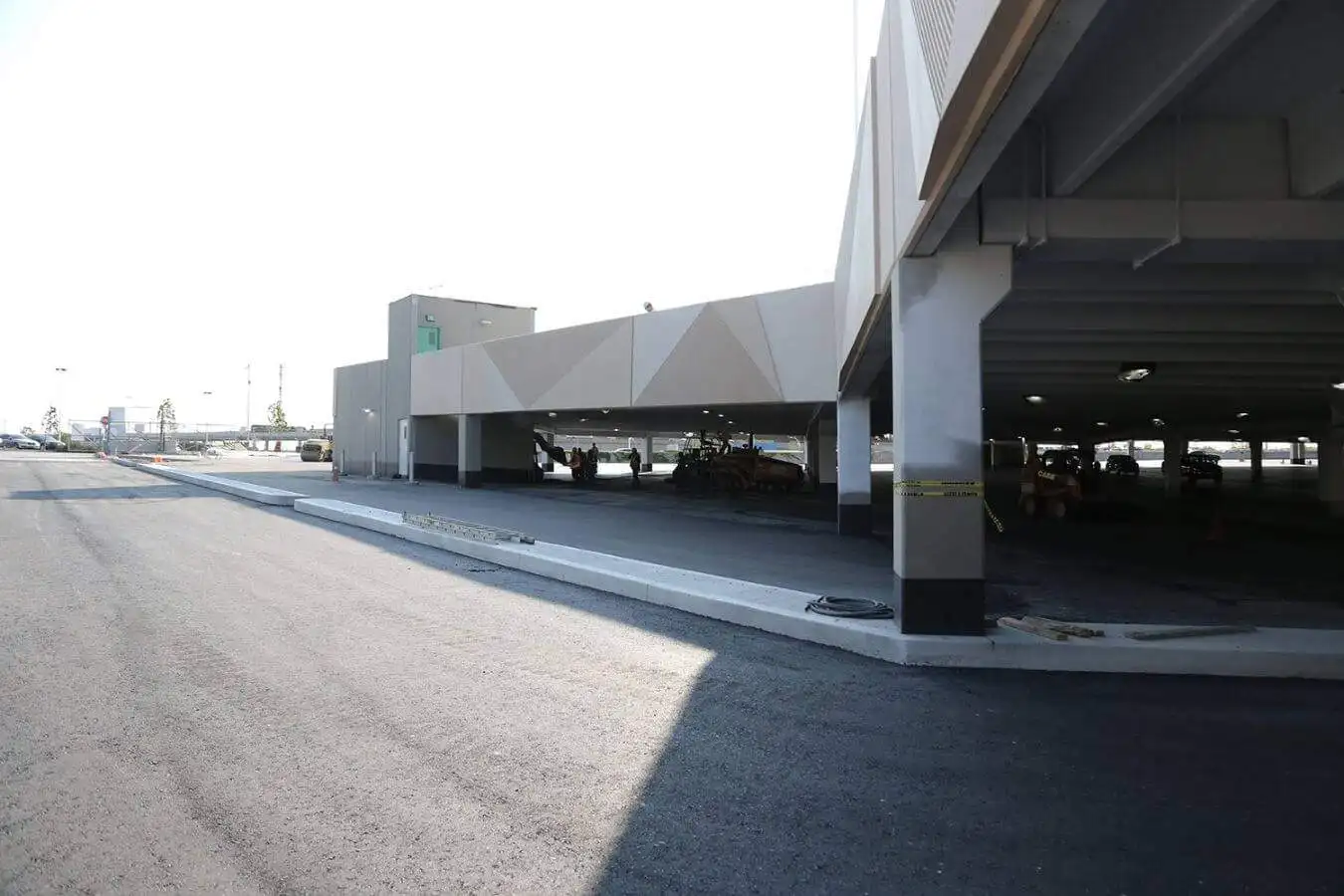
It’s late January, and a property manager is standing in a parking lot watching a plow catch the lip of a pothole that’s grown three times its size since November. The lot needs a full resurfacing, not another round of cold patch, and the question that comes up every single winter is the same one: can this just get done now, before it gets any worse?
The honest answer from a GTA paving crew is no, not the resurfacing itself, but there’s more nuance to it than a flat refusal, and there’s a lot a property owner can and should do right now instead of waiting until the phone starts ringing off the hook in April.
In this article:
- Why Hot Mix Asphalt and Cold GTA Temperatures Don’t Mix
- What Can Actually Get Done on Your Parking Lot This Winter
- The Real Cost of Waiting Until Spring to Deal With Winter Damage
- Why Booking Your Resurfacing Project in Winter Beats Waiting for Warm Weather
- What a Late-Winter Site Assessment Actually Looks For
- Get Your Spring Parking Lot Resurfacing Scheduled Now
Why Hot Mix Asphalt and Cold GTA Temperatures Don’t Mix
Hot mix asphalt has to stay hot long enough to be spread, graded, and compacted into a dense, bonded surface before it stiffens. In warm weather, a crew has a workable window measured in tens of minutes to get that compaction done. Once the ground and the surrounding air are cold, that window shrinks fast. The mat loses heat to the frozen sub-base underneath it almost as quickly as it loses heat to the air above it, and a load of asphalt that would stay workable for a comfortable stretch in July can cool past the point of proper compaction in a fraction of that time once temperatures drop.
When asphalt cools too fast, it can’t be compacted to the density it needs to resist water infiltration and vehicle loading. The result is a mat full of tiny voids that trap water, and water that freezes and expands inside those voids is exactly what tears a fresh surface apart from the inside before it’s even had a chance to prove itself. Laying asphalt on a frozen or wet sub-base compounds the problem further, since the base won’t compact properly either, and a resurfacing is only as good as what’s underneath it. This is the mechanical reason a full resurfacing gets scheduled for the warmer months, not a scheduling preference or a sales tactic.
What Can Actually Get Done on Your Parking Lot This Winter
Waiting until spring for a full resurfacing doesn’t mean nothing can happen between now and then. Several things are worth doing in winter, and doing them now genuinely changes what shape the lot is in when better weather arrives:
- Cold patch repair for potholes that are actively catching tires or growing worse with every freeze-thaw cycle, buying time until a permanent fix can go in
- A full site assessment and photo survey of the lot’s current condition, so the scope of a spring project is defined before crews are ever dispatched
- Drainage and grading review, since standing water that refreezes in the same low spots every winter is usually a sign the surface needs to be regraded, not just repatched, come spring
- Line striping and signage planning, which can be finalized on paper well ahead of the season so it isn’t holding up the project once paving starts
None of these substitute for a proper resurfacing, but each one either limits the damage accumulating right now or removes a step from the spring timeline.
The Real Cost of Waiting Until Spring to Deal With Winter Damage
Ignoring a deteriorating lot through the winter and treating the conversation as a spring problem is one of the more expensive habits a property manager can fall into, and it’s worth being blunt about why. A pothole that starts as a surface crack lets water into the base every time it thaws, and every freeze after that expands the damage a little further. By the time spring arrives, what could have been addressed as isolated patching in December has often spread into base failure across a wider section of the lot, which changes the scope of the project from a resurfacing to a full-depth reconstruction in some areas.
There’s also a liability dimension that gets overlooked. A lot with worsening potholes and inconsistent drainage through the winter months is a slip-and-fall and vehicle-damage risk for the entire season, not just a cosmetic issue waiting for warmer weather. Addressing what can be addressed now, even if it’s only cold patch and drainage correction, reduces that exposure while the bigger fix waits for the right conditions.
Why Booking Your Resurfacing Project in Winter Beats Waiting for Warm Weather
Here’s the part that surprises a lot of property managers: the smartest time to lock in a spring or summer resurfacing project is right now, in the dead of winter, not once the weather actually turns. Luciano, one of Empire Paving’s longtime field crew leads, sees the same pattern play out every year: the properties that call in January get first pick of the spring schedule and the asphalt plants running at full output, while the properties that wait until the first warm week in April are calling at the exact same moment as every other lot in the GTA that just noticed how bad its winter damage really is.
Asphalt plants scale down production over the winter months since demand drops off, and that capacity doesn’t snap back instantly the day it warms up. Crews, equipment, and plant output all ramp up gradually through spring, and the properties already on the books get worked into that ramp-up first. Booking now, while everyone else is still waiting to think about it, is a genuinely counterintuitive way to get better scheduling and a faster project once the weather cooperates, and it costs nothing to get a site assessment done in the meantime.
What a Late-Winter Site Assessment Actually Looks For
A proper assessment in February or March isn’t a quick drive-by. It’s a look at the full lot with the goal of scoping the spring project accurately instead of guessing once the snow is gone. That includes checking whether cracking has stayed surface-level or worked into the base, mapping where water is pooling and refreezing, checking the condition of curbs and catch basins that tie into the lot’s drainage, and confirming whether existing line striping and accessible stall layouts still meet current standards or need to be redone as part of the project. Getting this done while the lot’s problems are still fresh and visible under thin snow cover, rather than waiting for a spring thaw to blur the picture, generally produces a more accurate scope and a more reliable quote.
For a plaza or industrial property with an active parking lot resurfacing project already identified, this is also the point where phasing gets discussed, since keeping tenants, customers, or loading access open during a spring project usually means splitting the work into sections rather than closing the entire lot at once.
Get Your Spring Parking Lot Resurfacing Scheduled Now
Empire Paving has handled parking lot paving and asphalt repair and maintenance across the GTA since 1976, through every winter the region has thrown at it, and the properties that come out ahead each spring are consistently the ones that called in before the season turned. If your lot has visible winter damage right now, a free assessment this winter gets a resurfacing project scoped, quoted, and queued for the earliest workable window in spring, instead of leaving it to chance once everyone else starts calling too.
Request Your Free Assessment
Call Empire Paving at 416-644-1444 to get your parking lot on the spring schedule before the rush starts.


 We were very pleased with the professional job done by Empire Paving this fall.Luciano and his team were very reliable, knowledgeable and able to handle all issues that arose during completion of this project. We would highly
recommend Empire Paving for any paving job!