Three contractors walk the same lot and come back with three different recommendations: one wants to patch the potholes, one wants to mill and overlay the whole surface, one wants to tear it out and start over. All three quotes can be honest. The problem is that a walk-through from the surface only tells part of the story, and the fix that’s right for your parking lot depends on something none of those quotes may have actually checked: what’s happening underneath the asphalt, not just on top of it.
In this article:
- What Repair, Resurfacing, and Reconstruction Actually Change
- Repair Fixes Isolated Damage, It Doesn’t Reset the Clock
- Resurfacing Restores the Surface When the Base Is Still Sound
- Reconstruction Starts Over From the Ground Up
- The Real Question Isn’t Cost, It’s What’s Happening Under the Surface
- Signs You’re Looking at the Wrong Fix
- A Practical Way to Decide Before You Get Quotes
- What Happens If You Choose Wrong
What Repair, Resurfacing, and Reconstruction Actually Change
These three options aren’t a ladder of “small, medium, large” the way a lot of quotes present them. Each one addresses a different part of the pavement structure, and choosing the wrong one usually doesn’t fail immediately, it fails on a delay, which is exactly why so many property managers end up redoing work they thought was already handled.
Repair Fixes Isolated Damage, It Doesn’t Reset the Clock
Crack sealing, pothole patching, and infrared repair address specific problem spots without touching the rest of the lot. This is the right call when the surrounding pavement and the base underneath are still sound, and the damage is limited to a handful of isolated areas rather than spread across the property. Repair buys time and stops small problems from spreading, but it doesn’t extend the underlying life of a surface that’s aging out everywhere at once. Patching the same three potholes every spring is usually a sign the lot has moved past the point where repair alone is the answer.
Resurfacing Restores the Surface When the Base Is Still Sound
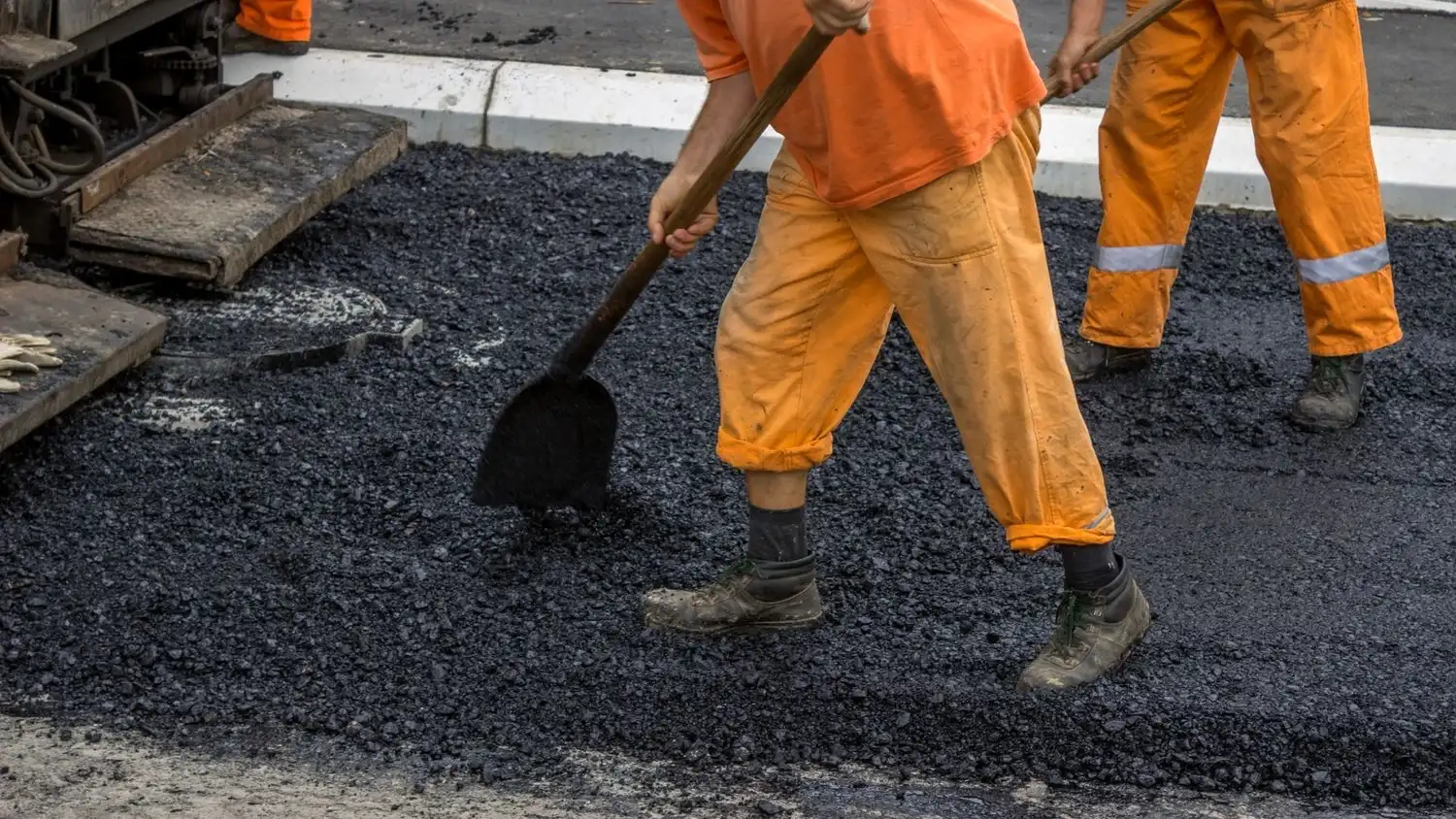
Resurfacing, typically a mill and overlay, removes the worn top layer of asphalt (usually one to two inches) and replaces it with a fresh layer over the existing base. This works because the base, the part doing the structural heavy lifting, is still stable, and only the surface has aged out through cracking, raveling, or fading. Resurfacing restores curb reveal and drainage grade along the way, correcting the small grading issues that build up after years of traffic and repeated sealcoating. It’s a meaningful reset, but only if the base underneath is actually still capable of supporting it.
Reconstruction Starts Over From the Ground Up
Full-depth reconstruction removes the asphalt down to the base and rebuilds the sub-base itself before any new asphalt goes down. This is what’s needed when the base has failed, not just the surface, and no amount of overlay work will hold on a foundation that’s already compromised. Reconstruction costs more and takes longer than the other two options, but it’s the only one that actually addresses a failed base rather than paving over it and hoping it holds through another freeze-thaw cycle.
The Real Question Isn’t Cost, It’s What’s Happening Under the Surface
Here’s the part that surprises a lot of property managers: the cheapest quote isn’t always the safest one, and it’s not because anyone is being dishonest. A repair quote assumes the base is fine because that’s the fastest and least invasive assessment to make. If nobody actually probes the base before recommending a fix, you can end up paying for the same patch repeatedly for a couple of years before the real problem, a failed sub-base, finally forces a reconstruction that a proper assessment would have caught much earlier and likely for less total cost over that same stretch of time.
As the Empire Paving team tells clients during site assessments, the visible damage on the surface is often the last thing to show up, not the first. By the time cracking or potholing is obvious across a whole section of lot, the base underneath has usually been compromised for a while already.
Signs You’re Looking at the Wrong Fix
A quick way to sanity check a quote before signing off on it:
- If a contractor recommends resurfacing without mentioning the base at all, ask what they checked underneath
- If the same isolated spots keep failing again within a year of patching, that’s usually a base issue, not a surface one
- If cracking is widespread and connected rather than a few separate spots, resurfacing alone likely won’t hold
- If there’s standing water or persistent soft spots underfoot, the sub-base needs to be part of the conversation
- If a lot has already been resurfaced once and is now losing curb clearance, another overlay is rarely the right move
A Practical Way to Decide Before You Get Quotes
Before comparing bids, ask each contractor the same question: what did you check below the surface, and what did you find. A repair-only quote that skips this entirely isn’t necessarily wrong, but it’s incomplete, and it’s worth getting a second opinion that actually probes the base before committing budget to a fix that might not hold past the next freeze-thaw season. This is also the point where a fall or spring assessment pays for itself: catching a resurfacing-stage problem before it becomes a reconstruction-stage one is almost always the cheaper outcome, even though it means spending money sooner rather than later.
What Happens If You Choose Wrong
Choosing repair when the base has failed means redoing the same patch work on a yearly cycle while the underlying problem keeps spreading. Choosing resurfacing over a base that isn’t sound means paying for a fresh surface that starts cracking again within a season or two, sometimes faster than the surface it replaced. Reconstruction is rarely the wrong choice technically, but it’s the most expensive and disruptive option, which is exactly why getting the diagnosis right the first time matters more than getting the fastest quote.
Get an Honest Assessment Before You Commit to a Fix
If you’re getting different recommendations from different contractors, or you’re not sure whether last year’s patch job is going to hold through another winter, get a site visit that actually looks at what’s happening below the surface, not just what’s visible on top. Empire Paving’s asphalt repair and maintenance team assesses the base before recommending a fix, so you’re not guessing which of the three options your property actually needs. Call 416-644-1444 or request a free estimate online to get your lot assessed properly before your next budget cycle locks in the wrong solution.
Whether the right answer turns out to be a targeted repair or a full parking lot reconstruction, Empire Paving has handled both ends of that range for commercial, industrial, and municipal properties across the GTA since 1976, and can walk you through exactly what your site needs and why.

 We were very pleased with the professional job done by Empire Paving this fall.Luciano and his team were very reliable, knowledgeable and able to handle all issues that arose during completion of this project. We would highly
recommend Empire Paving for any paving job!