

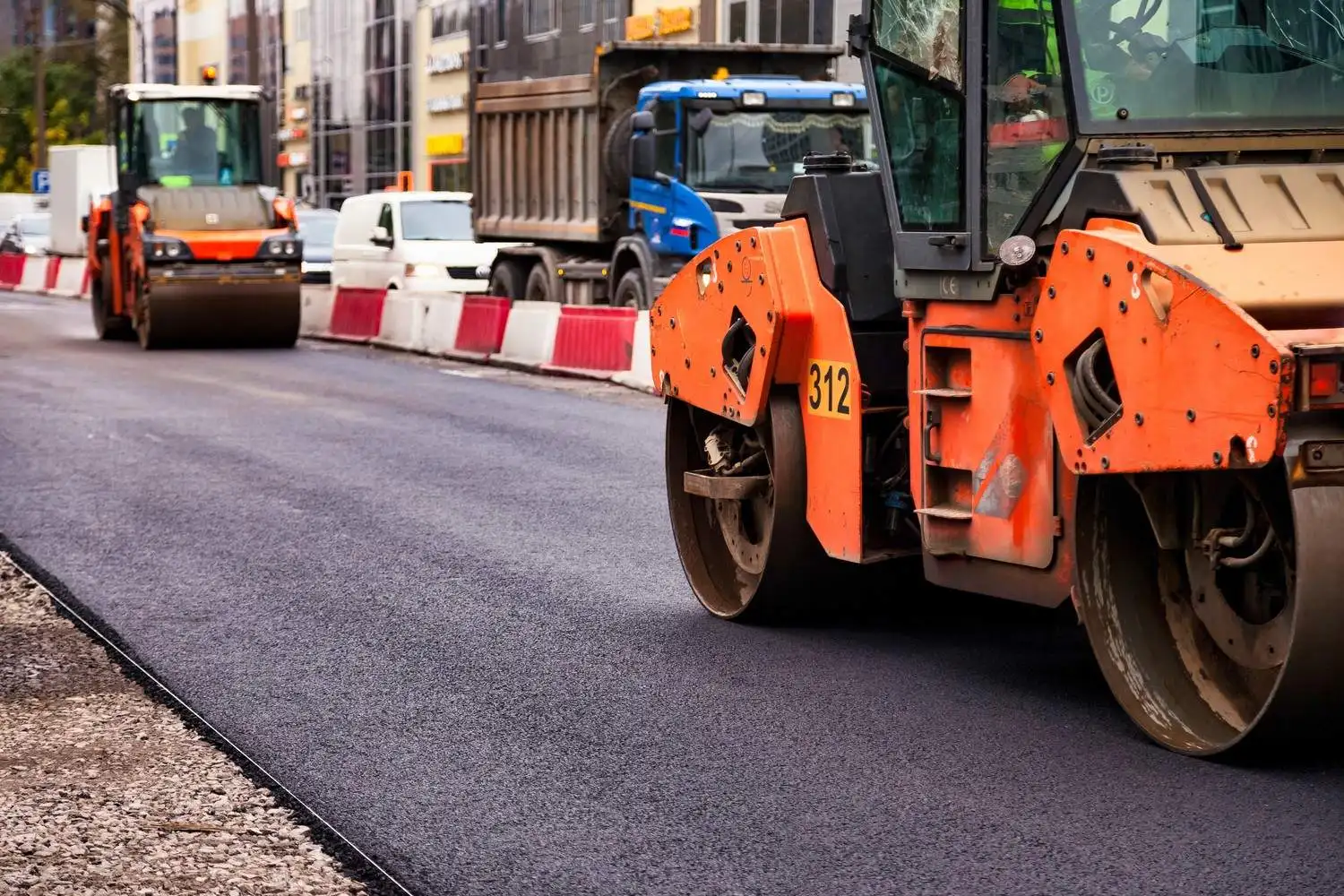
Three years after a retail plaza reopens, the corner by the loading dock is already rutted and pooling water, while the rest of the lot still looks new. Same asphalt mix, same paving crew, same day of installation. The difference was never the surface course. It was a design decision made before a single ton of asphalt was ever laid, one that assumed the wrong vehicles would be using that corner of the property.
This is the pattern we see across parking lots, industrial yards, and municipal sites throughout the Greater Toronto Area. Pavement that fails early almost never fails because the asphalt itself was poor quality. It fails because the design underneath it never accounted for how the property would actually be used once tenants moved in and trucks started showing up.
- Why Commercial Pavement Design Starts With Traffic, Not Asphalt Thickness
- Classifying Load Types: Passenger Vehicles, Delivery Trucks and Heavy Equipment
- Base and Subgrade Engineering: The Layer Nobody Sees But Everyone Feels
- Layout Decisions That Determine Long-Term Performance
- Drainage and Grading: Designing Slopes Before Laying Asphalt
- Joint Placement and Where Pavement Fails First
- Matching Pavement Design to How the Property Will Actually Be Used
- Common Design Mistakes That Shorten Pavement Life
- Building a Maintenance Plan Into the Original Design
Why Commercial Pavement Design Starts With Traffic, Not Asphalt Thickness
Most conversations about commercial paving start with the wrong question. Property owners and developers often ask how thick the asphalt should be, when the more useful question is what will actually be driving across it, how often, and for how many years.
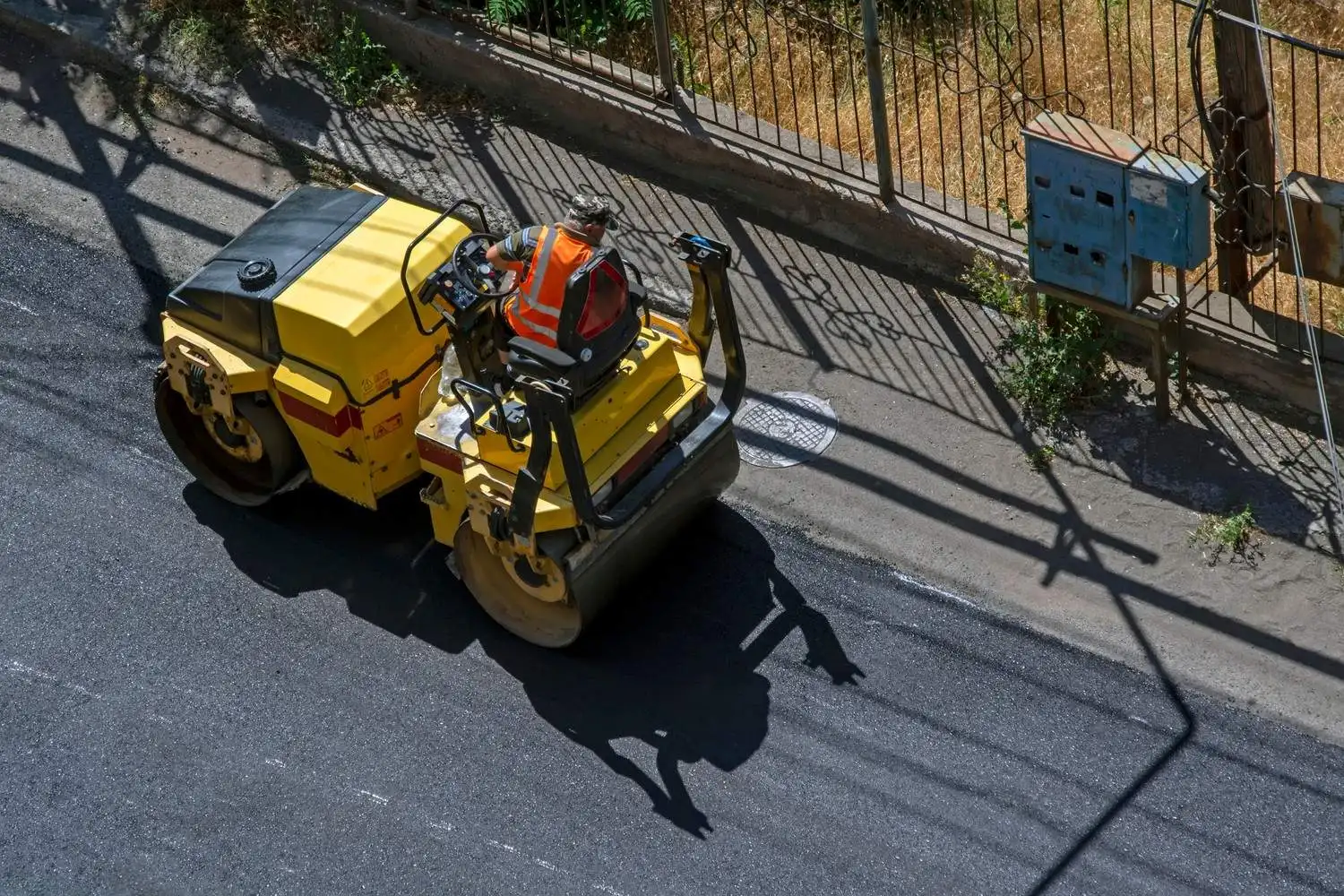
A pavement structure designed for a retail plaza with light passenger traffic looks nothing like one designed for a distribution center with daily tractor-trailer deliveries, even if both projects ask for the same visible surface finish. Thickness is one output of the design process, not the starting input. The starting input is traffic.
Classifying Load Types: Passenger Vehicles, Delivery Trucks and Heavy Equipment
Every commercial property carries a mix of vehicle types, and each one places a different kind of stress on the pavement structure below it. A car exerts a light, evenly distributed load across four small tire contact points. A loaded delivery truck concentrates far more weight over fewer, harder tire surfaces, and it tends to repeat the same path along entrance lanes and dock approaches thousands of times over the life of the pavement.
Before a commercial paving design is finalized, the load profile of the site needs to be understood in terms of:
- The heaviest vehicle expected to use the surface regularly, not just the average vehicle
- How often that heavy vehicle repeats the same travel path (channelized traffic wears pavement far faster than traffic that disperses across a wide area)
- Whether vehicles will be turning, braking, or idling in place, since static and turning loads stress pavement differently than straight-line travel
- Seasonal load changes, such as snow removal equipment or seasonal delivery increases
This is one of the more counterintuitive parts of commercial pavement design. It is tempting to design around the average vehicle using a lot, since that represents the majority of traffic. In practice, pavement should be designed around the heaviest, most repetitive load it will realistically face, because that is the load that determines when the surface fails, not the light traffic that passes over it without leaving a mark.
Base and Subgrade Engineering: The Layer Nobody Sees But Everyone Feels
Asphalt is a surface material sitting on top of a structural system, and the structural system does most of the work of carrying a load. Underneath the visible asphalt sit a base course and a subgrade, and their preparation determines whether the pavement above them holds up or gradually deforms under repeated loading.
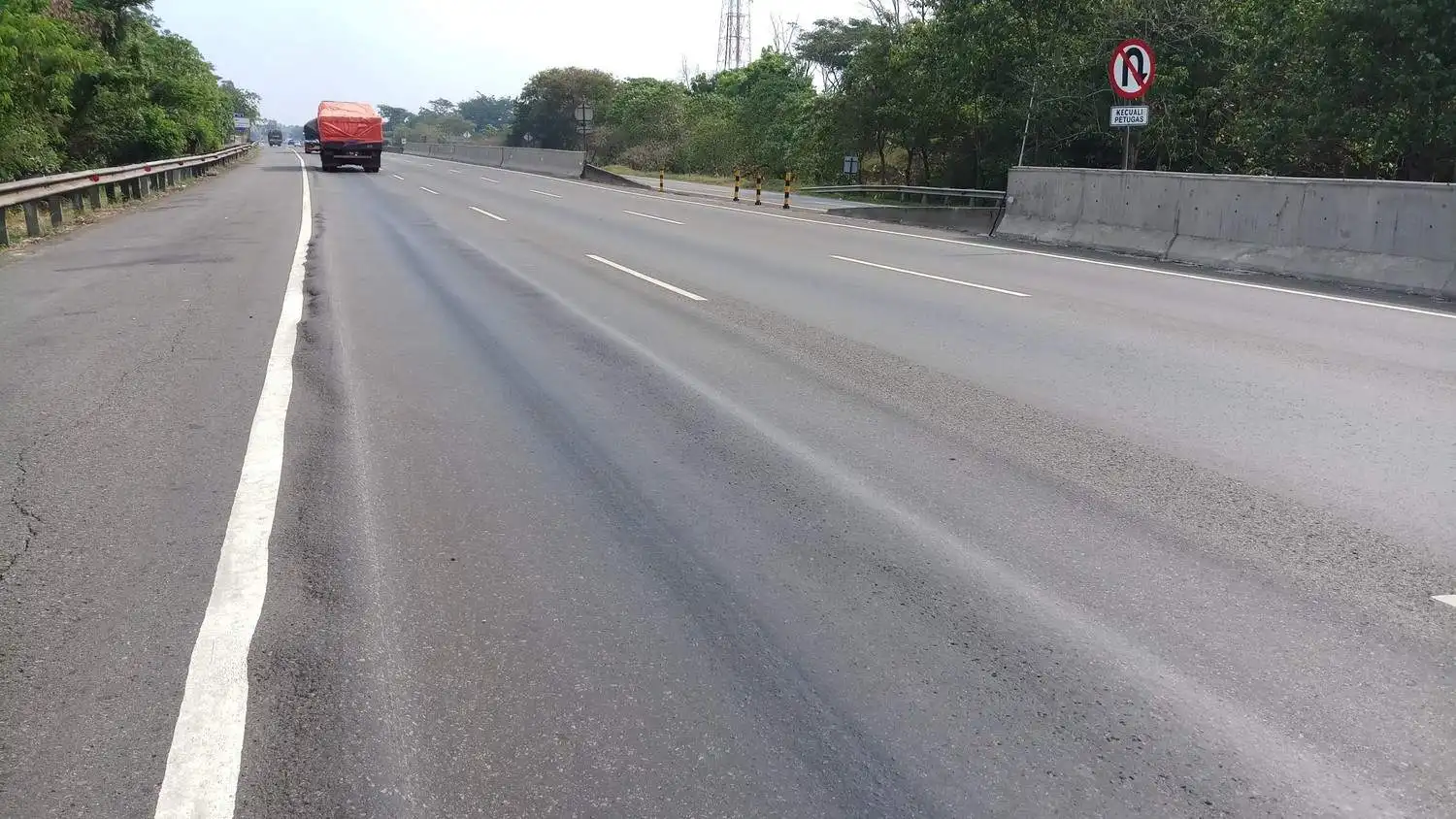
Poorly compacted base material behaves like a soft mattress under a load. Each pass of a heavy vehicle pushes the base material sideways instead of holding its shape, and over time this shows up on the surface as rutting, particularly in the exact wheel paths where trucks travel repeatedly. Once rutting appears at the surface, it means the damage already happened well below it. Resurfacing the top layer without correcting the base underneath usually buys a property a short reprieve before the same failure reappears in the same spot.
Subgrade soil conditions also matter more than most property owners expect. Clay-heavy soils common across parts of Southern Ontario hold water and shift with seasonal freeze-thaw cycles, which is part of why a design that works well on one site can underperform on another even with an identical asphalt mix on top.
Layout Decisions That Determine Long-Term Performance
Pavement layout is often treated as an architectural or circulation question, handled separately from the paving specification. In reality, layout decisions directly determine how concentrated or distributed the traffic load will be across the site, which is one of the biggest variables in how long the pavement lasts.
Key layout factors that affect long-term pavement performance include:
- Drive aisle widths and whether they allow trucks to move without repeatedly tracking the same tight path
- Turning radii at building corners and loading areas, since undersized radii force trucks to scrub their tires against the same section of pavement on every pass
- Loading dock apron design, which typically needs a heavier pavement structure than the general parking field because trucks idle, brake, and pivot in that zone
- Placement of curbs, islands, and drainage structures relative to truck turning paths, since a curb positioned along a truck’s natural swing path becomes a recurring impact point
Getting these layout details right at the design stage costs far less than correcting them after the pavement is already installed and the damage pattern has become predictable.
Drainage and Grading: Designing Slopes Before Laying Asphalt
Water is one of the most consistent causes of early commercial pavement failure, and drainage is decided long before asphalt is placed. Grading determines where water goes once it hits the surface, and a lot graded without enough slope, or with slope running toward the wrong low point, will hold water against the pavement structure for longer than it should.
Standing water does two things to asphalt over time. It works its way into any surface crack or joint and accelerates the deterioration of the layers underneath, and during freeze-thaw cycles it expands inside those cracks and physically pries the pavement apart from below. A site that drains well can tolerate a fair amount of surface wear before it becomes a structural problem. A site with poor drainage can fail structurally even with a relatively young surface course, simply because water never had anywhere to go.
Joint Placement and Where Pavement Fails First
Every asphalt surface includes joints, whether between paving passes, at the connection to concrete curbs and sidewalks, or around drainage structures and utility access points. Joints are consistently the first place pavement shows distress, because they represent a break in the continuous structure rather than a weakness in the material itself.
Thoughtful joint placement keeps these transition points away from the highest-traffic paths whenever possible. It is far better to plan a joint’s location around where trucks will actually travel than to discover after the fact that a construction joint sits directly in a truck’s primary wheel path.
Matching Pavement Design to How the Property Will Actually Be Used
One of the recurring lessons from decades of commercial and industrial paving work is that the properties with the longest-lasting pavement are rarely the ones with the thickest asphalt. They are the ones where the design matched the actual use of the site from the beginning. As the Empire Paving team has seen across projects for municipalities, school boards, retail plazas, and industrial clients, a pavement structure engineered around real traffic patterns consistently outperforms one built to a generic specification, even when the generic specification uses more material.
This is why an accurate assessment of intended use matters as much as the paving work itself. A property manager who can describe expected delivery frequency, vehicle types, and traffic patterns gives a paving contractor the information needed to design a structure that actually matches the site, rather than defaulting to a one-size-fits-all approach that may be overbuilt in some areas and underbuilt in others. This is typically the starting point of a free paving consultation and estimate, where traffic patterns, site conditions, and long-term goals are reviewed before any design decisions are finalized.
Common Design Mistakes That Shorten Pavement Life
Certain design mistakes show up repeatedly across commercial properties, and most of them are avoidable with the right planning at the outset:
- Applying a uniform pavement thickness across the entire site instead of reinforcing high-load zones like dock aprons and entrance lanes
- Underestimating turning radii needed for delivery trucks, resulting in repeated tire scrubbing at the same pavement location
- Grading the lot for aesthetics rather than drainage, leaving low points where water collects against the pavement structure
- Skipping proper subgrade compaction to save time during construction, which shows up as structural failure years later
- Treating concrete and asphalt transition points as an afterthought instead of planning joint placement around traffic paths
Building a Maintenance Plan Into the Original Design
Long-term pavement performance is not just a construction question, it is also a maintenance question that should be considered during design. Surfaces designed with future crack sealing, patching, and eventual resurfacing in mind tend to age more predictably than surfaces where maintenance access was never part of the original plan. Coordinating early with a contractor who understands both the paving design and the asphalt repair and maintenance work that follows it helps property managers budget realistically for the full lifespan of the surface, rather than being surprised by early deterioration in areas that were never designed to handle the traffic they ended up carrying.
For properties that already show signs of the layout or drainage issues described above, this is also where a broader concrete work plan often enters the conversation, particularly around curbs, dock aprons, and drainage structures that interact directly with the asphalt around them.
Ready to Design a Pavement System Built for Your Property’s Actual Traffic
Every commercial property has its own traffic patterns, vehicle mix, and site conditions, and a pavement design that ignores those specifics tends to reveal its weaknesses within the first few years rather than lasting through a full service life. Empire Paving has spent over 50 years designing and installing commercial, industrial, institutional, and municipal pavement across the Greater Toronto Area, working directly with property managers, developers, and facility operators to build surfaces around how a site is actually used.
If you are planning a new lot, a redevelopment, or an expansion that will change your site’s traffic patterns, a free paving consultation and estimate is the most direct way to get a design that matches your property rather than a generic specification. Contact Empire Paving to start that conversation before your next project breaks ground.


 We were very pleased with the professional job done by Empire Paving this fall.Luciano and his team were very reliable, knowledgeable and able to handle all issues that arose during completion of this project. We would highly
recommend Empire Paving for any paving job!
We were very pleased with the professional job done by Empire Paving this fall.Luciano and his team were very reliable, knowledgeable and able to handle all issues that arose during completion of this project. We would highly
recommend Empire Paving for any paving job!