

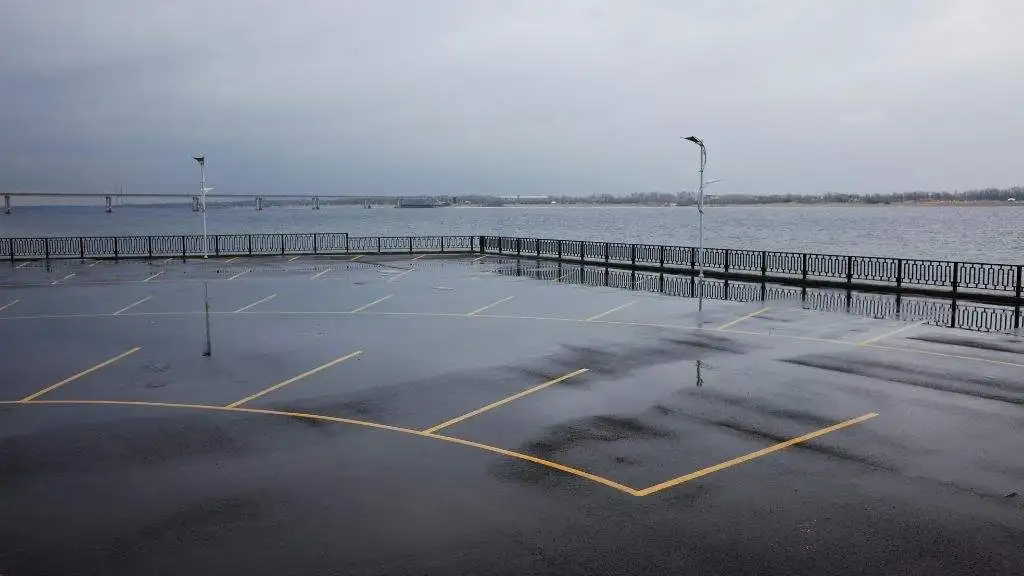
By late October, a lot of property managers have the same blind spot: they treat leaf cleanup as a landscaping task, not a pavement one. Meanwhile, a pile of wet leaves sitting in a low corner of a parking lot, against a curb, or in the shaded end of a driveway is quietly doing more damage to the asphalt underneath than an entire summer of traffic did.
Leaves themselves aren’t the real issue. What they trap and what they leave behind is.
In this article:
- Wet Leaves Trap Moisture Against the Surface
- Decomposing Debris Works Its Way Into Cracks and Seams
- Organic Acids and Tannins Stain and Soften the Surface
- Clogged Drains Turn Leaf Piles Into Standing Water
- Walkways and Sports Courts Face a Different Kind of Wear
- Parking Lots Multiply the Problem Across a Larger Surface
- A Fall Maintenance Routine That Actually Protects the Surface
- When Leaf Damage Has Already Set In
Wet Leaves Trap Moisture Against the Surface
Asphalt is designed to shed water. A layer of wet, matted leaves does the opposite: it holds water directly against the surface long after the rest of the lot or driveway has dried. That extended exposure softens the asphalt binder over time and gives water more opportunity to work its way into any existing hairline crack. Once the weather turns and that trapped moisture freezes, it expands inside the crack it just found its way into, and the freeze-thaw cycle that normally takes a full winter to widen a crack gets a head start weeks earlier than it would on a clear surface.
This is the part most people miss: it’s not the volume of leaves that causes the damage, it’s how long they stay wet in one spot. A light, dry layer that blows across a lot in an afternoon is far less harmful than a smaller pile that sits soggy in a shaded corner or against a curb for two or three weeks. As the Empire Paving team points out on fall maintenance visits, the worst damage is almost always found in the spots nobody walks or drives over regularly, not the high-traffic areas everyone assumes to check first.
Decomposing Debris Works Its Way Into Cracks and Seams
As leaves break down, they don’t just sit on top of the surface, they decompose into finer organic material that gets pressed into existing cracks, joints, and seams by traffic and rain. That material holds even more moisture than the leaves did whole, and it’s much harder to sweep or blow out once it’s compacted into a crack. Over a single fall and winter, a hairline crack that would normally have stayed dry and stable can end up packed with decomposed debris that keeps it wet through every thaw, accelerating the exact kind of crack growth that eventually turns into a pothole.
Organic Acids and Tannins Stain and Soften the Surface
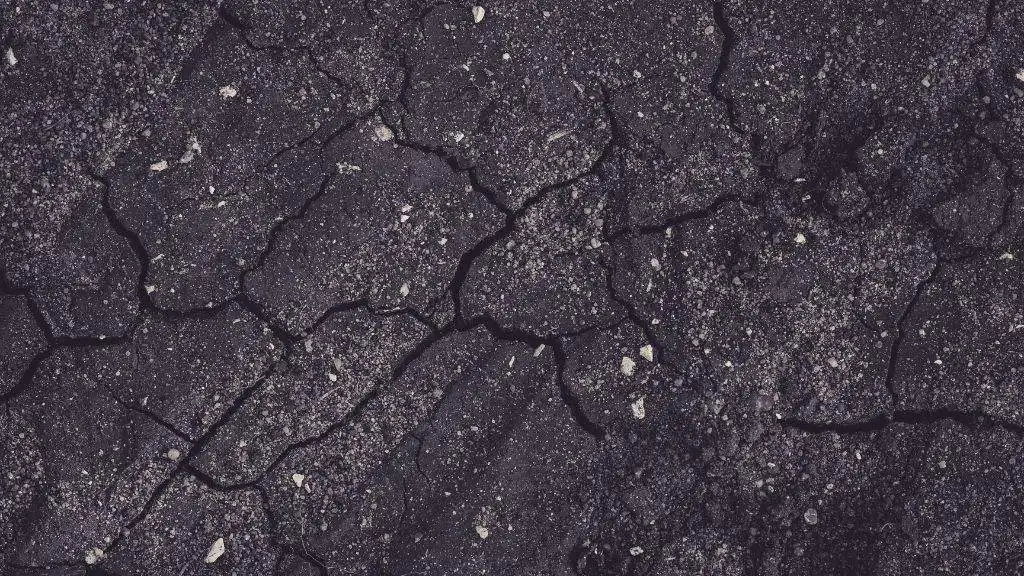
Decomposing leaves release organic acids and tannins, the same compounds that stain a driveway or walkway a dark, blotchy brown long after the leaves themselves are gone. On asphalt, these compounds do more than discolour the surface. Prolonged contact can soften the asphalt binder at the surface level, making that spot more susceptible to raveling and surface wear than the rest of the pavement around it. This is especially noticeable on lighter, newer asphalt, where staining shows up faster and is harder to reverse once it sets in.
Clogged Drains Turn Leaf Piles Into Standing Water
On a parking lot or larger commercial property, the bigger risk usually isn’t the leaves on the pavement itself, it’s the leaves that end up in catch basins, drainage channels, and low-flow areas. A drain clogged with wet leaves can turn a properly graded lot into a lot with standing water after every rain, and standing water is one of the fastest ways to undermine a sub-base that was otherwise in good condition. A property that’s never had a drainage complaint in ten years can develop one in a single wet fall if catch basins aren’t checked and cleared before the leaves really start coming down.
Walkways and Sports Courts Face a Different Kind of Wear
Walkways and sport courts don’t carry vehicle traffic, but that doesn’t make them immune, it just changes how the damage shows up. On a narrow walkway, leaves tend to collect against the edges and near planters or building walls, and that’s where staining and surface softening concentrate first. On a sport court, the coating and surface texture that keep the court playable are more sensitive to prolonged moisture and organic staining than a standard driveway or lot, and a court that sits under tree cover often needs leaf clearing on a tighter schedule than the rest of a property to avoid moss growth and a slippery surface once the weather turns wet.
Parking Lots Multiply the Problem Across a Larger Surface
A commercial parking lot has more square footage, more shaded corners, more curbs and drainage points, and more places for leaves to pile up unnoticed than a single driveway does. That scale is exactly why leaf-related asphalt damage on a commercial property tends to show up as several small problem areas scattered across the lot rather than one obvious spot, and why a routine fall walk-through by whoever manages the site matters more than most people assume.
- Dark staining or discoloration in shaded corners, along curbs, or near landscaping
- Standing water after rain in areas that used to drain fine
- Soft or spongy spots underfoot near where leaves have been sitting
- Moss or mildew forming on sport courts or shaded walkway sections
- Cracks that seem to be widening faster than they did the previous fall
A Fall Maintenance Routine That Actually Protects the Surface
Clearing leaves before they mat down and decompose is the single biggest thing a property owner or manager can do, but timing and drainage matter as much as the clearing itself. If a property already has areas where water pools after a clogged catch basin, or cracks that widened noticeably last winter, this is the season to get crack sealing and drainage correction done before the ground freezes, not after the first thaw reveals the problem. Empire Paving’s asphalt repair and maintenance crews run fall site assessments specifically to catch these smaller issues while they’re still a surface-level fix rather than a base failure waiting for spring. For anyone managing a property with a history of drainage or staining complaints, a quick look now from the Asphalt Repair & Maintenance team is a lot less disruptive than dealing with a failed section of lot in April.
When Leaf Damage Has Already Set In
If staining, softening, or cracking has already progressed past a surface-level issue, the fix depends on how far it’s gone. Isolated staining and minor surface softening can often be addressed with a targeted repair and a surface treatment. Cracking that’s widened and started pulling in more debris each season usually needs sealing or patching before it reaches the base. And if a driveway has reached the point where staining, cracking, and edge breakdown are all showing up in the same area, it may be more cost-effective to plan a full repave than to keep chasing the same spot every fall. Anyone weighing that decision on a residential driveway can see the full range of options on our Driveway Paving page.
Get Ahead of Fall Damage Before Freeze-Thaw Sets In
The window between the first leaves falling and the ground freezing is the best time to deal with staining, drainage, and early cracking, not the following spring when the damage has already widened. Empire Paving offers free site assessments for driveways, walkways, sport courts, and parking lots across the GTA, so you know exactly what needs attention now versus what can wait. Call 416-644-1444 or request a free estimate online to get a fall assessment scheduled before the season’s first freeze.

 We were very pleased with the professional job done by Empire Paving this fall.Luciano and his team were very reliable, knowledgeable and able to handle all issues that arose during completion of this project. We would highly
recommend Empire Paving for any paving job!
We were very pleased with the professional job done by Empire Paving this fall.Luciano and his team were very reliable, knowledgeable and able to handle all issues that arose during completion of this project. We would highly
recommend Empire Paving for any paving job!