By the second weekend of the holiday rush, the lot behind a busy retail plaza is full before noon. Cars stack up at the main entrance, a delivery truck swings wide around the loading corner, and the same cracked patch of asphalt that looked harmless in September is now taking far more passes a day than it ever has. A small pothole opens on Friday night. By Saturday afternoon it is a tire complaint, a trip hazard, and a call to the property manager.
Retail asphalt rarely fails because of the holidays alone. It fails because peak traffic arrives just as colder weather starts working on every weakness the lot already had. The properties that get through the season cleanly are the ones that found those weak points before the crowds did.
In this article:
- Holiday Traffic Stresses a Retail Lot Differently Than the Rest of the Year
- Entrances, Drive Aisles, and Loading Zones Fail Before Parking Stalls Do
- Early Cold Turns Small Cracks Into Open Potholes
- Plows, Salt, and Snow Piles Add a Second Layer of Stress
- Shoppers Arriving in the Dark Raise the Stakes on Surface Condition
- A Pre-Season Walkthrough Property Managers Can Run Themselves
- Fixing Everything in November Is the Wrong Goal
- Phased Work Keeps Tenants Open and Shoppers Parking
- Get Your Lot Holiday-Ready Before the First Freeze
Holiday Traffic Stresses a Retail Lot Differently Than the Rest of the Year
A retail lot does not simply carry more cars in December. It carries more cars moving slowly, braking, turning, and queuing along the same predictable paths. Asphalt tolerates steady rolling loads better than it tolerates repeated slow turning and stopping, which scrub and shear the surface layer and gradually loosen it. Layer in delivery trucks restocking tenants on tighter schedules, and some of the heaviest vehicles on the property end up crossing the same worn areas as shopper traffic. For anyone responsible for retail paving, the practical takeaway is that peak season concentrates stress on specific zones instead of spreading it evenly across the lot.
Entrances, Drive Aisles, and Loading Zones Fail Before Parking Stalls Do
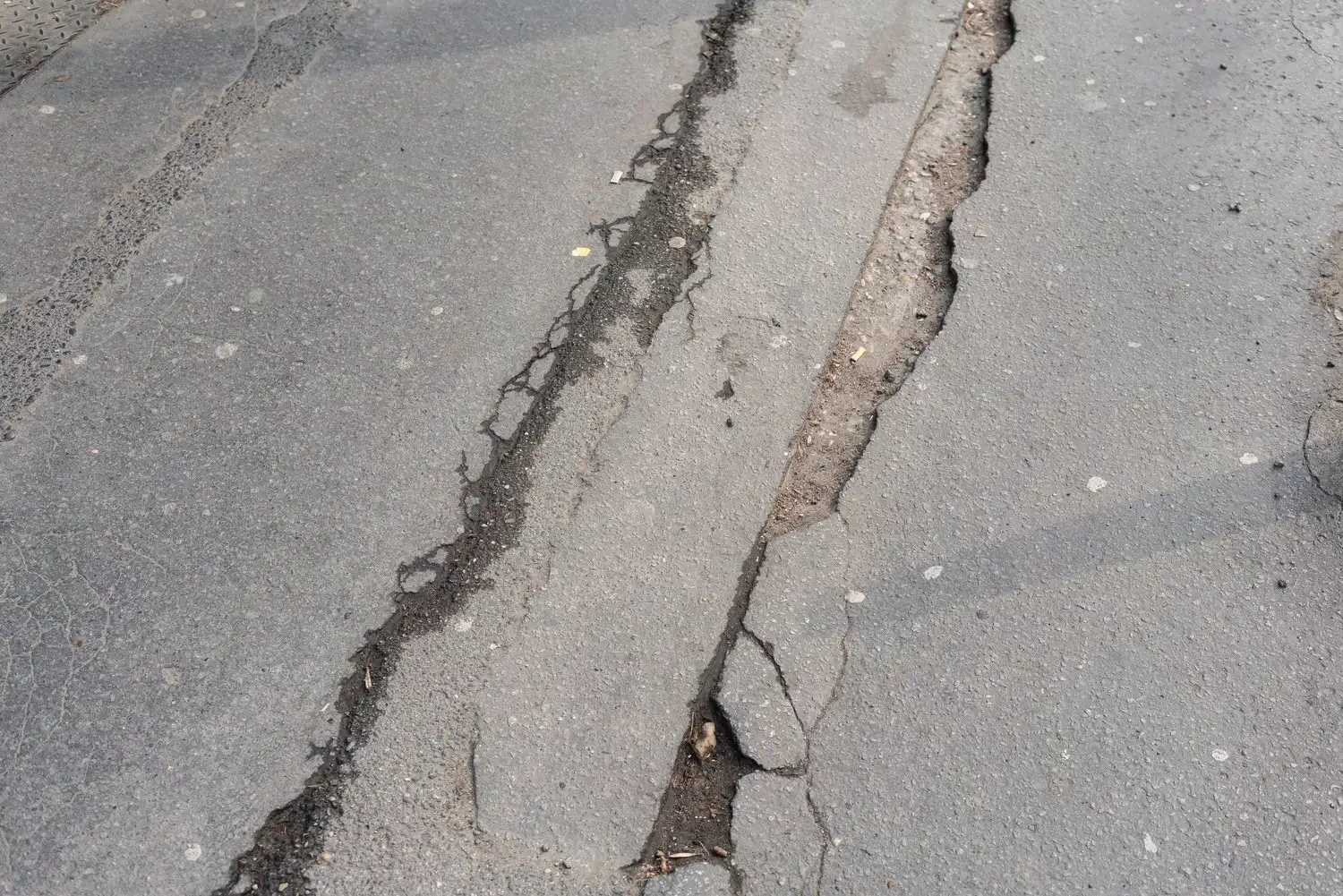
Parked vehicles put light, static loads on the stalls. The entrance throat, the main drive aisle, and the approach to the loading dock take the braking, turning, and heavy axle loads. That is why distress shows up there first: rutting where wheels track the same line, shoving where trucks turn, and alligator cracking where the base is no longer supporting the surface. Dumpster areas and delivery turning paths follow the same pattern.
As the Empire Paving team sees on retail properties, the stalls tend to look fine until very late, which gives a false sense that the whole lot is in good shape. A better read of the pavement comes from the lanes that carry the most turning traffic, not the parking rows shoppers see first.
Early Cold Turns Small Cracks Into Open Potholes
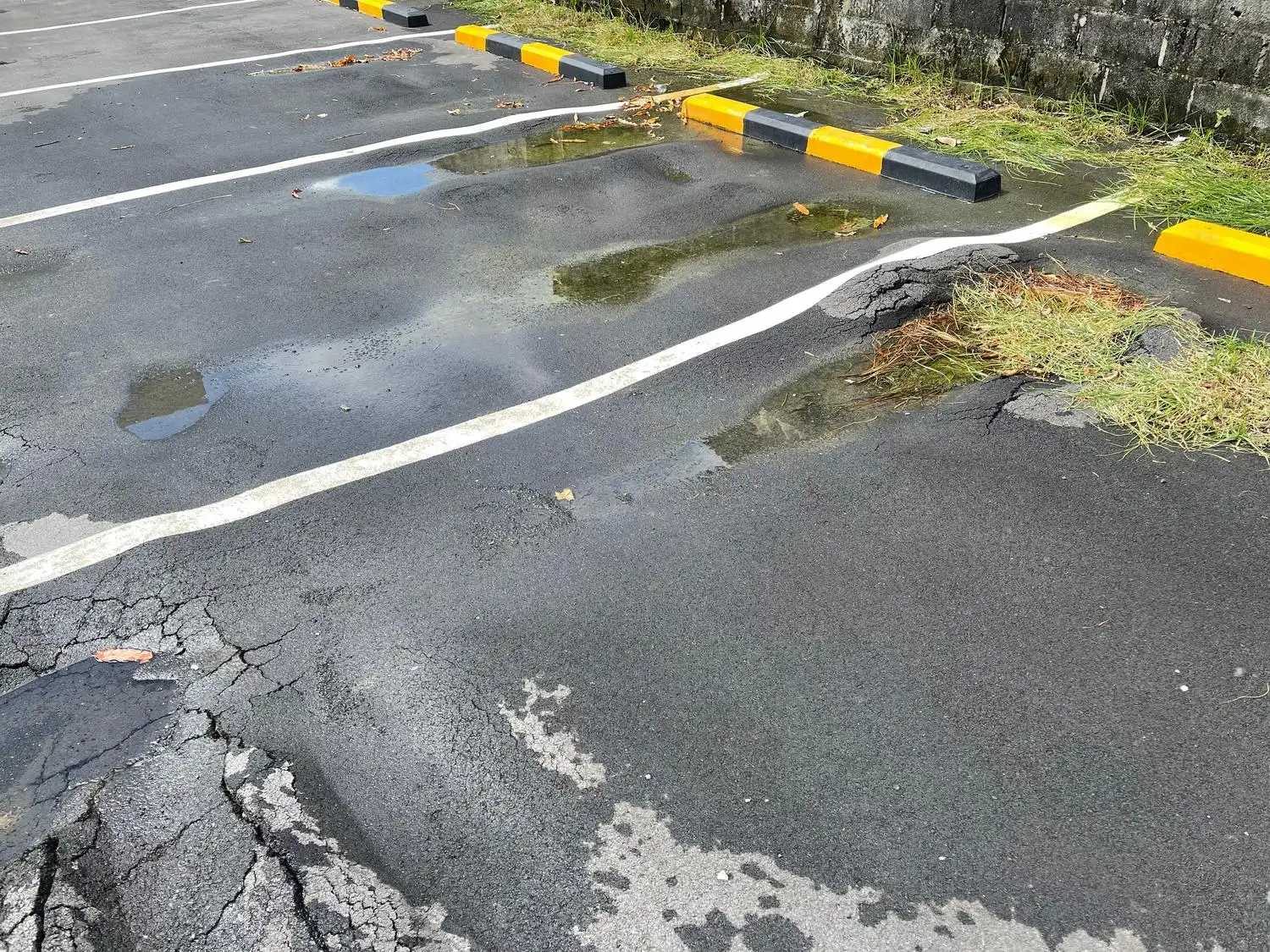
Water is what turns a crack into a pothole. Late fall rain slips into cracks and into the base beneath them, and the first frosts freeze that water and expand it, which pries the crack wider and loosens the surrounding asphalt. Cold also makes asphalt stiffer and less forgiving, so cracks open more easily under repeated wheel loads. Once the surface is loose, every passing tire pumps water and fine material back out from underneath, and a small crack becomes a void that collapses. On a retail lot, where the same paths see constant traffic, that sequence can move from hairline crack to open pothole within a single shopping season.
Plows, Salt, and Snow Piles Add a Second Layer of Stress
Winter operations bring their own risks. Plow blades catch anything that sits proud of the surface, such as raised utility covers, uneven patch edges, and cracked sections that have started to lift, and they can tear those areas apart in a single pass. De-icing salt melts snow at lower temperatures, which can mean more melt and refreeze cycles at the pavement surface, and each cycle pushes more water into any open crack. Snow stockpiled over catch basins or on the high side of the lot sends meltwater across the pavement, where it refreezes in drive aisles and low spots. Planning where snow gets piled, and keeping drainage structures clear, protects both the asphalt and shopper safety. Empire Paving also offers snow removal for commercial and industrial clients, so winter operations and pavement protection can be planned together.
Shoppers Arriving in the Dark Raise the Stakes on Surface Condition
Shorter days mean many shoppers arrive after work in low light, often on wet pavement that reflects headlights and hides depth. A pothole that was easy to see in summer becomes a hazard, and faded markings on accessible stalls, fire routes, crosswalks, and stop bars become harder to read when it matters most. Surface defects and worn markings also raise the risk of trip and fall incidents, and a documented record of inspections and prompt repairs helps show that a property is being actively maintained. Restriping is one of the most visible upgrades before peak season, but it only performs well when it is applied over a sound surface, not over cracks and loose patches.
A Pre-Season Walkthrough Property Managers Can Run Themselves
A walkthrough takes little time and shows where to focus. Walk the lot on a dry day, then again after rain, and check the following:
- Entrance throats and the first stretch of the main drive aisle
- Loading zones, dumpster areas, and delivery turning paths
- Cracks that have opened wider since summer or show staining around the edges
- Areas where water lingers after rain
- Catch basins, trench drains, and low points
- Raised or sunken utility covers and patch edges that sit above the surrounding surface
- Faded accessible stalls, fire routes, crosswalks, and stop bars
- Edges where asphalt meets curbs, sidewalks, and concrete aprons
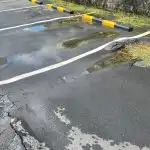
Standing water is especially telling, because water that lingers well after the rest of the pavement has dried usually points to a low spot or a failing base.
If the walkthrough turns up more than a few items, or the same spots keep reappearing after repairs, a professional assessment is the next step. Empire Paving’s asphalt repair and maintenance team diagnoses what is happening at the surface and in the base before scoping a fix, so the repair matches the real cause rather than the visible symptom.
Fixing Everything in November Is the Wrong Goal
The most common mistake is trying to do too much, too late. Surface treatments and larger paving work depend on warm, dry weather to cure and compact properly, and cooler conditions shrink that window. Rushed late-season work can fail faster than the problem it was meant to solve.
A smarter approach is to triage. Handle safety items and water entry points first: crack sealing, pothole repair, drainage clearing, and visibility items like striping. A well-executed temporary repair that holds through winter is worth more than a permanent fix squeezed into poor conditions. Then plan larger work, such as resurfacing or full parking lot paving, for spring, with a documented scope so the decision is already made when the weather turns.
Phased Work Keeps Tenants Open and Shoppers Parking
The holiday season leaves little room for disruption, so the work needs to follow the retail calendar instead of fighting it. Phasing repairs by section keeps entrances, accessible stalls, and loading access open. Off-peak or overnight scheduling avoids the busiest windows, and advance notice to tenants about delivery access and temporary closures prevents surprises. The goal is repair work that stays out of the shopper’s way and is manageable for tenants, which is why scope and sequencing deserve as much attention as the repair itself. Empire Paving has handled commercial, industrial, institutional, and municipal projects since 1976 where minimizing operational disruption is a requirement, not a bonus.
Get Your Lot Holiday-Ready Before the First Freeze
Every week of delay shortens the window for repairs that need decent weather. A free paving consultation and estimate from Empire Paving gives property managers a clear view of what needs attention now, what can safely wait until spring, and how to schedule work around tenant activity. Call 416-644-1444 or request a free estimate online to get your retail lot assessed before peak shopping season and the first hard freeze.


 We were very pleased with the professional job done by Empire Paving this fall.Luciano and his team were very reliable, knowledgeable and able to handle all issues that arose during completion of this project. We would highly
recommend Empire Paving for any paving job!